The app
Three surfaces. No feed anywhere.
The app is being built now. The waitlist runs ahead of it, by hand, so we learn what people actually want to be matched on before we automate the answer.
Discover people
A profile is a few interests, an age, a rough location and a short description. You're shown people whose interests overlap or complement yours — never an everyone-in-a-pile feed you swipe through until something happens.
The thing being optimised is match quality, not match volume. A tie is only worth having if it's relevant, so showing you more people is not the same as showing you better ones.
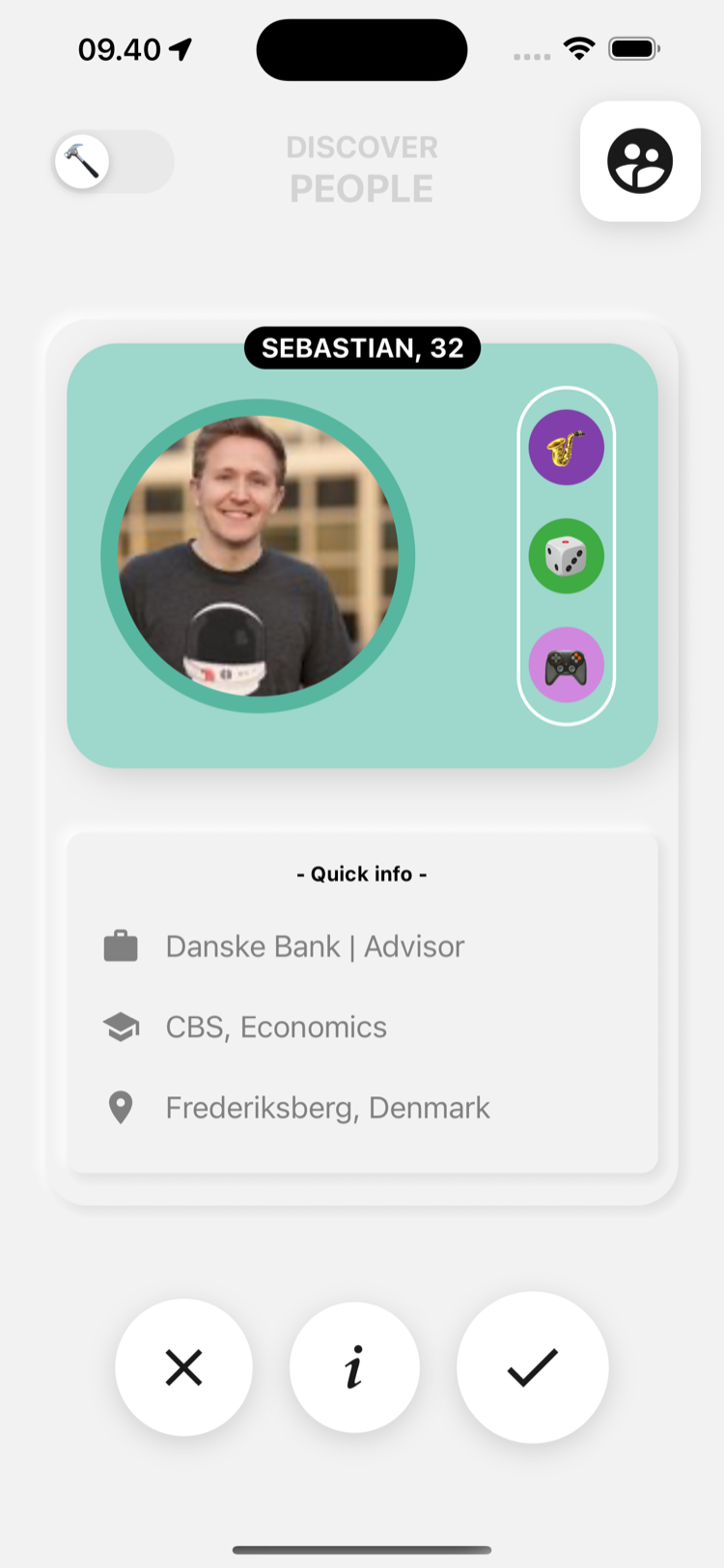
Discover People
Conversations
When two people both want to connect, a thread opens — seeded with icebreakers built from what you actually have in common. Two people who both put down golf get a golf prompt, not a blinking cursor.
This sounds small and isn't. The empty message box is where most potential connections quietly die: not from lack of interest, but because nobody wants to write the first line.
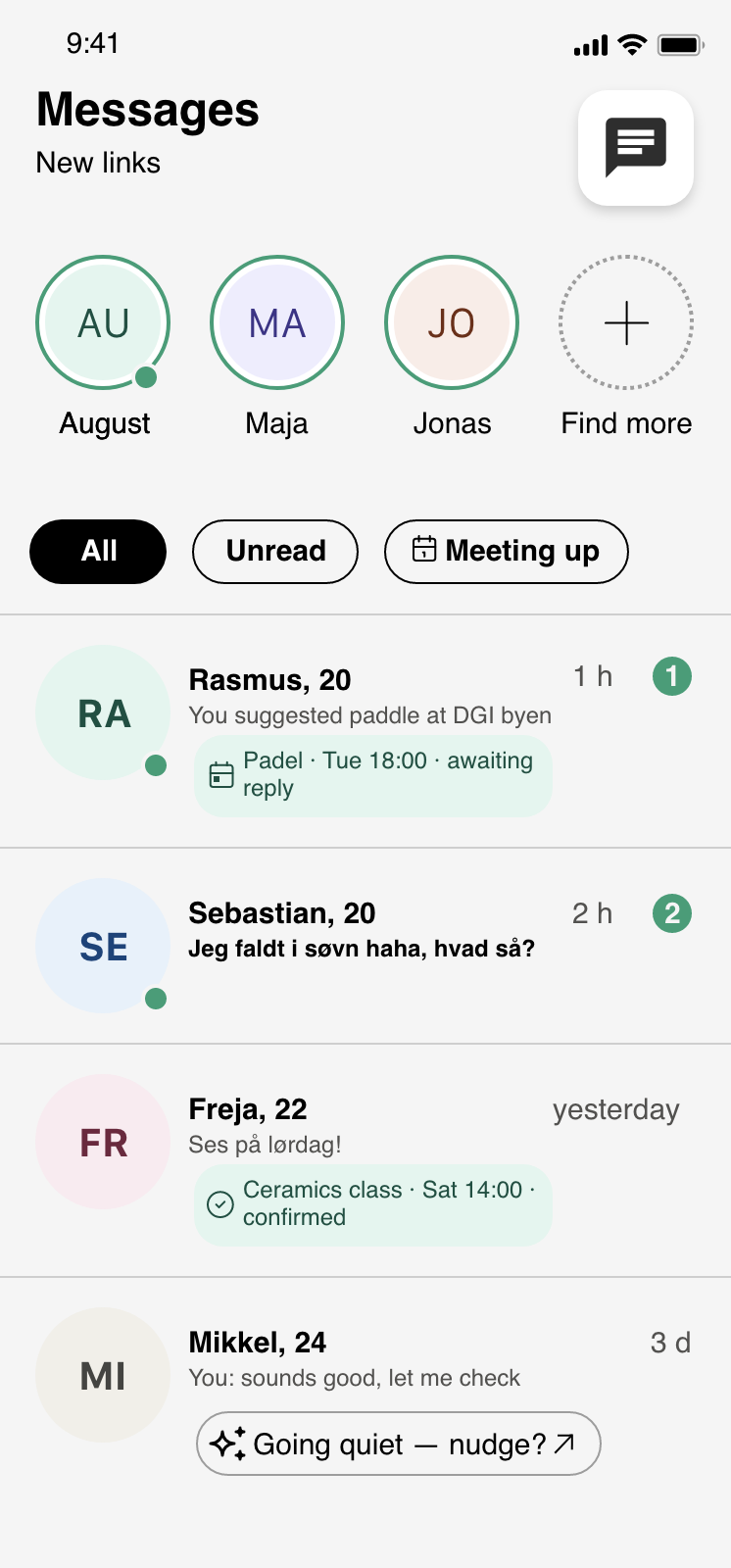
Conversations
Discover activities
A separate surface for real things happening nearby, filtered by interest and location, hosted by actual local businesses and organisers. It's what closes the loop — the reason a connection becomes a plan instead of a thread that goes quiet after four days.
This is the part that arrives after the matching loop is proven, and it's the part the business model rests on.
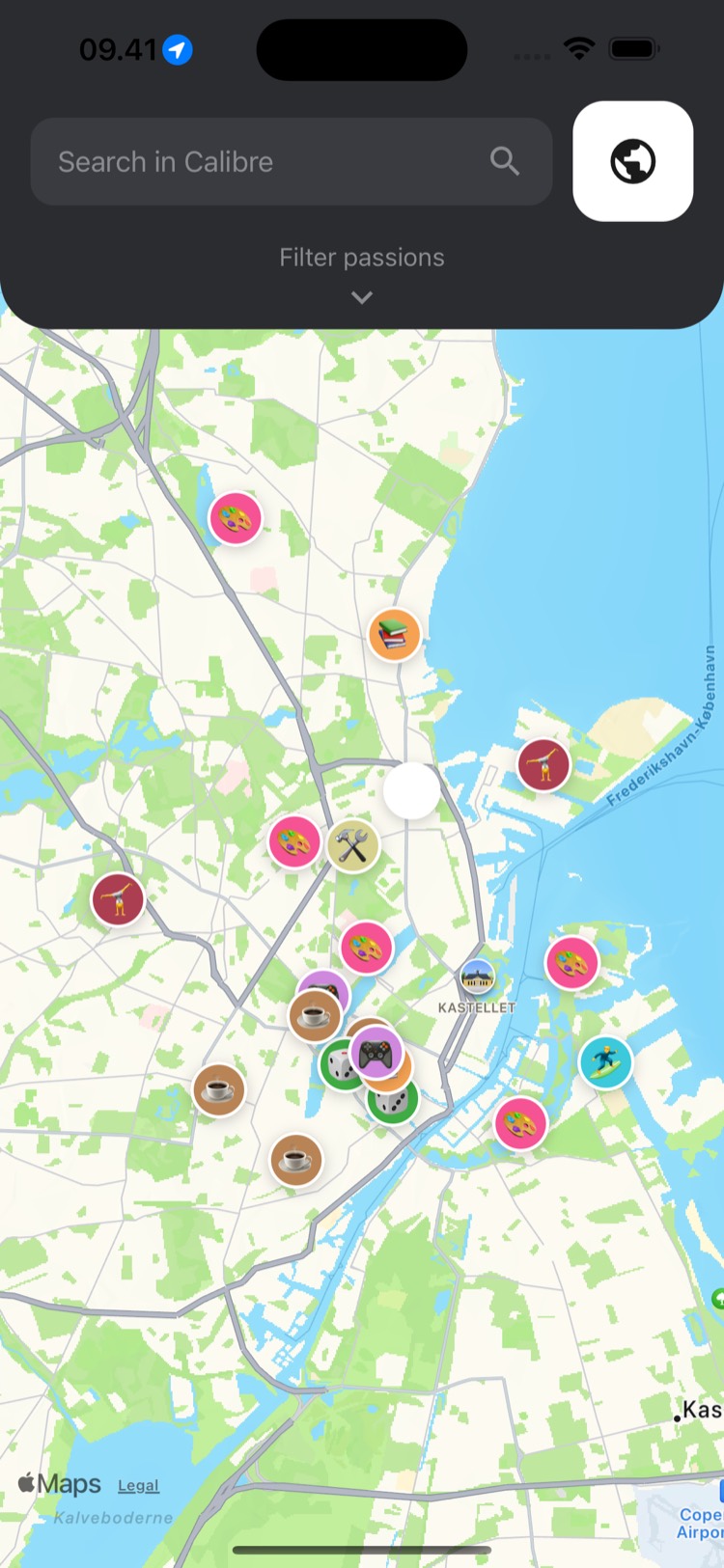
Discover Activities
What it looks like when it works
Someone lands in a city for a meeting with a few hours spare. Instead of spending them alone, they find another user nearby who's also into golf, and they play a short round beforehand. Over the course of it they find three more things in common, and arrange to meet again next time they're both in town.
One low-friction, interest-matched afternoon that turns into something lasting. That's the whole product, described once.
Trust and safety, not bolted on later
The premise is arranging first meetings between strangers, so privacy controls aren't a later hardening pass. Granular permissions for photos, location, microphone and camera are scoped into the first build, and location and photo access are asked for rather than assumed.
On the security side: session-token rotation on login, single-session enforcement, and email notification when someone signs in from a new device — with two-factor close behind.